


I Liceum Ogólnokształcące
im. Feliksa Fabianiego w Radomsku
Szkoła otwarta na ludzi
OFERTA EDUKACYJNA NA ROK SZKOLNY 2026/2027


AKTUALNOŚCI

Sukcesy naszych licealistów w prestiżowym konkursie z języka niemieckiego
GALILEO to nazwa ogólnopolskiego konkursu adresowanego do dzieci i młodzieży szkół podstawowych i ponadpodstawowych. Organizatorem tego współzawodnictwa jest Centrum Edukacji Szkolnej. Młodzież I LO podczas tegorocznej edycji udowodniła, że jej znajomość języka niemieckiego daje możliwość sięgania po najwyższe wyróżnienia. Rozwiązując opracowany przez CES test uczestnicy uzupełniali luki w zdaniach, odpowiadali na pytania, komentowali fotografie czy dobierali właściwe słownictwo. Odpowiednio do poziomu klas pojawiały się zadania ze zróżnicowanym stopniem trudności. Rzetelne przygotowanie zaowocowało sukcesami.
Na szczególne słowa uznania zasługuje Adrian Ściegienny (IVC), który rozwiązał wszystkie zaproponowane ćwiczenia i tym samym zdobył stuprocentowy wynik zajmując 1 miejsce. Poniżej zamieszczamy imienny spis zwycięzców (z zaznaczeniem klasy) według listy rankingowej z podaniem kategorii dyplomu.
Daria Zinevych (IC) /Dyplom laureata, Aleksandra Siwek (1C)/ Dyplom laureata, Lena Bajon (1C)/ Dyplom laureata, Zofia Miedzińska (1C)/ Dyplom laureata, Alicja Stefańczyk (1C)/ Dyplom wyróżnienia, Karol Puczkowski (3D)/ Dyplom laureata, Kacper Smolarek (3D1)/ Dyplom wyróżnienia, Kinga Kmieć (4C)/ Dyplom laureata, Aleksandra Bus (4C)/ Dyplom wyróżnienia, Katarzyna Marczak (4C)/ Dyplom wyróżnienia. Oznaczeni jako uczniowie klas czwartych to dziś już absolwenci naszego liceum.
Zwycięzcy współzawodnictwa odebrali w dniu 2 czerwca okolicznościowe dyplomy i nagrody. Uroczystość podsumowująca inicjatywę odbyła się w gabinecie pana Dyrektora, Bogdana Węgrzyńskiego, który wyraził swoje słowa uznania i podkreślił ważną rolę języka niemieckiego w procesie kształcenia na etapie szkolnym i w życiu zawodowym. Do gratulacji przyłączyła się także pani Wicedyrektor, Anna Piotrowska-Borowicz oraz panie germanistki, które współpracowały z młodzieżą.
Uczennice z klasy IC przygotowywała pani Małgorzata Szablewska, uczniów klas IIID i IIID1 oraz z klasy IVC tj. Adriana i Katarzynę pani Justyna Broniszewska, uczennice z klasy IVC Aleksandrę i Kingę pani Iwona Bałazińska.
Opiekunowie merytoryczni wyróżnionej młodzieży życzą kolejnych sukcesów i satysfakcji z pracy nad doskonaleniem języka niemieckiego.

Debata z MEN
Ponad 400 uczniów z województwa łódzkiego, a wśród nich także nasi reprezentanci, w poniedziałek 1. czerwca wzięło udział w forum dyskusyjnym pod hasłem „Diagnoza Młodzieży 2026. Zetki w Łódzkiem”. Gościem honorowym wydarzenia była Pani Barbara Nowacka Minister Edukacji. W forum uczestniczyli także europarlamentarzyści, parlamentarzyści oraz samorządowcy z województwa łódzkiego.
Miejscem tego wyjątkowego spotkania była aula Akademii Sztuk Pięknych w Łodzi. Udział w takiej debacie to ogromne wyróżnienie i dowód uznania dla pracy naszej szkoły, ponieważ to właśnie do nas wpłynęło prestiżowe zaproszenie od organizatora – Łódzkiego Kuratora Oświaty pana Janusza Brzozowskiego.
Naszą szkołę reprezentowali: Marta Łysik z klasy III C – jako moderatorka debaty, Tomasz Mazur nauczyciel geografii oraz WOS – jako uczestnik dyskusji, uczniowie i uczennice z klas IIID, IIID1 oraz IIIC.
W pierwszej części forum uczniowie z całego województwa łódzkiego debatowali nad pięcioma kluczowymi tezami: „Starsze pokolenie ma powody, aby uważać, że pokolenie Z jest roszczeniowe”, „Szkoła jest największym źródłem codziennego stresu i wyczerpania”, „Uczniowie nie mają poczucia realnego wpływu na decyzje dotyczące szkoły”, „Młodzież nie ufa specjalistom zatrudnionym w szkole”, „Szkoła jest przestarzała”.
Po burzliwych dyskusjach pani Minister Edukacji Barbara Nowacka została zaproszona na środek auli, gdzie wzięła udział w otwartej rozmowie z młodzieżą i nauczycielami. Punktem wyjścia do dyskusji podczas forum „Zetki vs. Boomerzy” był dokument pt. „Diagnoza Młodzieży 2026. Raport i rekomendacja”, który powstał z inicjatywy Ministerstwa Edukacji. Jego autorami są eksperci Polskiego Towarzystwa Polityki Społecznej z ponad 20 szkół wyższych. Raport ma być fundamentem dla powstającej właśnie Krajowej Strategii Młodzieżowej.

Laureaci Konkursu Literackiego
Dzisiaj - 3 czerwca - w Miejskiej Bibliotece Publicznej odbyło się rozstrzygnięcie Konkursu Literackiego zorganizowanego w ramach obchodów XXV Radomszczańskich Dni Rodziny.
Aż troje uczniów naszej szkoły zostało laureatami tego konkursu: Natalia Goździkowska i Martyna Suś z klasy III A zdobyły II miejsce, a Marcel Burda, z tej samej klasy, miejsce III; Paweł Dębski z I F otrzymał wyróżnienie.
Opiekunkami merytorycznymi uczniów były Aneta Jędrzejczyk i Katarzyna Łągiewka.
Serdecznie gratulujemy literackich talentów!
DZIEŃ DZIECKA W I LO
Zabawa, radość, rywalizacja i miła atmosfera towarzyszyły uczniom w dniu ich święta.
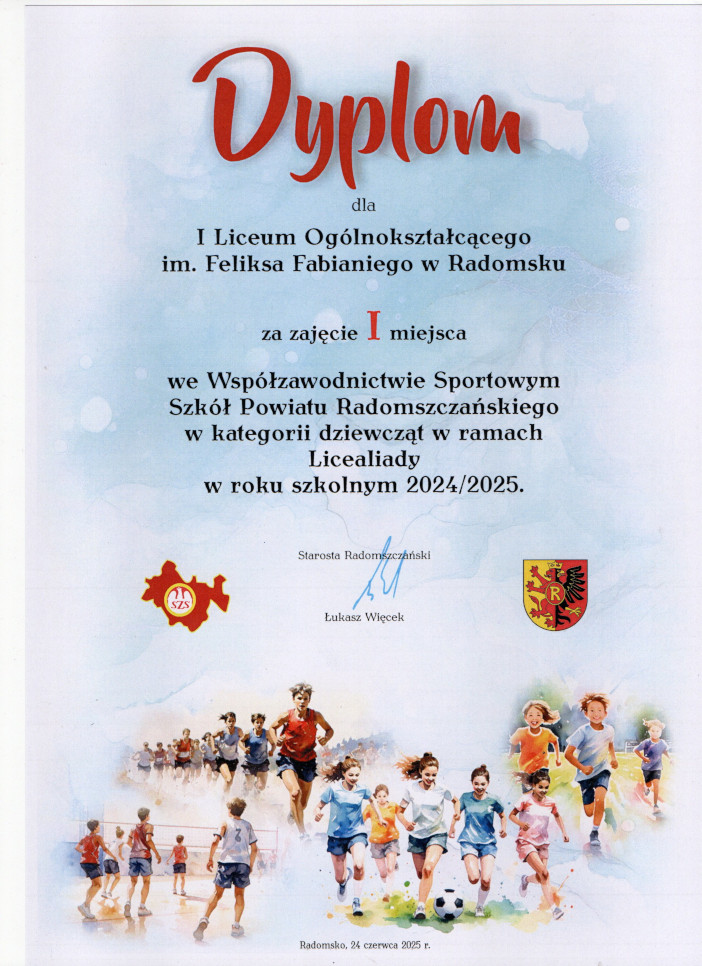
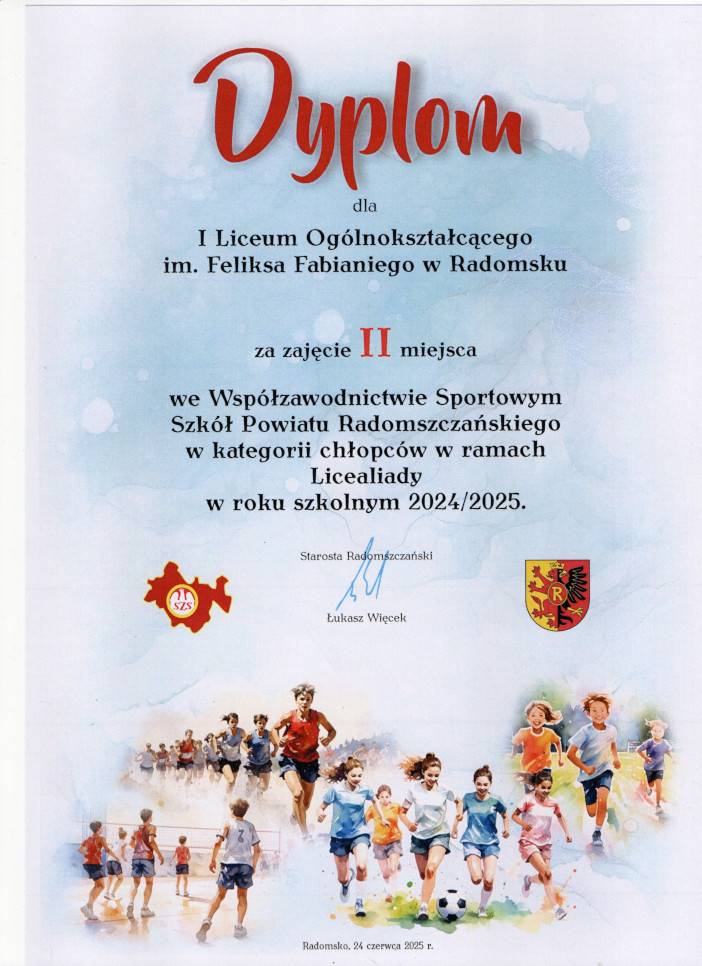
Turniej Piłki Siatkowej o Puchar Dyrektora I LO przyniósł wiele emocji i pozytywnej energii.
Wyniki rozgrywek:- I MIEJSCE - klasa I D
- II MIEJSCE - klasa I E
- III MIEJSCE - klasa III F
Gratulujemy zwycięzcom!!!
Bardzo dziękujemy wszystkim uczestnikom za udział w turnieju!
Organizatorzy: Ewa Pieles, Marta Kurek, Łukasz Stępień, Samorząd Uczniowski

Dzień Przeciwko Hejtowi w naszej szkole
29 maja w naszej szkole odbył się Dzień Przeciwko Hejtowi. Z tej okazji klasa II d przeprowadziła anonimową ankietę dotyczącą zjawiska hejtu. Jej celem było poznanie skali problemu, miejsc, w których najczęściej spotykamy się z hejtem oraz częstotliwości występowania tego zjawiska wśród uczniów naszej szkoły.
Tego dnia szkolni wolontariusze (Schoolworkerzy) pełnili całodzienny dyżur. Każda osoba, która chciała porozmawiać o swoich trudnościach, problemach lub doświadczeniach związanych z hejtem, mogła liczyć na wsparcie i życzliwą rozmowę.
Wydarzenie przebiegało w przyjaznej atmosferze. Uczniowie mogli zakupić słodkości, a dodatkową atrakcją było losowanie inspirujących motywujących sentencji, które miały dodać otuchy i zachęcić do życzliwości wobec innych.
Mamy nadzieję, że ten dzień przyczynił się do zwiększenia świadomości na temat hejtu oraz przypomniał, jak ważne są wzajemny szacunek, empatia i odpowiedzialność za słowa.

Nauka geografii w plenerze
Uczniowie klasy pierwszej, matematyczno - językowej, gdzie geografia należy do przedmiotów realizowanych w rozszerzeniu zgłębiali swą wiedzę krajoznawczą poznając Góry Świętokrzyskie w trakcie dwudniowej wycieczki edukacyjnej. Towarzyszyli im koledzy z klas 1B, 1C, 1E i 1F pod opieką pani Beaty Zając-Turlejskiej i pani Beaty Wójcik oraz wychowawczyni klasy 1D.
Z pięknie położonej, tuż przy granicy Świętokrzyskiego Parku Narodowego miejscowości Święta Katarzyna wycieczkowicze wyruszyli na Łysicę (612 m n.p.m.). Podczas wędrówki przewodnik przekazał informacje na temat flory i fauny tegoż parku pozostającego pod ścisłą ochroną. Wspinaczka po rumowiskach skalnych – gołoborzach w malowniczej Puszczy Jodłowej, uwiecznionej w opisach Stefana Żeromskiego, była ciekawym doświadczeniem poznawczym. Relaks zapewniła Sielpia – turystyczna perełka Kielecczyzny. W kolejnym dniu podążając żółtym szlakiem uczestnicy udali się do Chęcin, by odbyć przechadzkę po ruinach zamku, gdzie odbywały się zjazdy możnowładców i rycerstwa małopolskiego oraz wielkopolskiego na przełomie XIV i XV w. Zwiedzanie Kielc, stolicy województwa świętokrzyskiego zakończyło wycieczkę. Dwudniowa wyprawa, przy pięknej pogodzie nie tylko poszerzyła wiedzę w zakresie urokliwej kielecczyzny, ale także zintegrowała licealistów.
Dziękujemy pracownikom biura bergamuta za zaangażowanie w wykreowaniu cennego programu edukacyjnego.
Iwona Bałazińska

Spotkanie z literatem niemieckojęzycznym
Dzięki wieloletniej współpracy naszego liceum z Fundacją Karla Dedeciusa we Frankfurcie nad Odrą zostało w dniu 27.05. zrealizowane spotkanie online z cenionym austriackim pisarzem Radkiem Knappem, laureatem prestiżowych nagród. Rolę moderatora przejęła dr Ilona Czechowska, kierownik Fundacji. W inicjatywie wzięli udział uczniowie klasy matematyczno-językowej (IIID), którzy w eterze spotkali się z kolegami z innych szkół. Pisarz odsłonił kulisy swojej drogi życiowej ukierunkowanej na zawód pisarza. Urodzony w Polsce wyemigrował jako nastolatek do Austrii, do Wiednia. Tam nauczył się języka niemieckiego i rozpoczął swoją karierę pisarską. Choć, jak stwierdził pisze w języku, który ma zupełnie inną matrycę, niż jego język ojczysty, to kilka dekad spędzonych wśród Austriaków spowodowało, że na papier przelewa umiejętnie nie tylko słowa, ale i emocje, doznania i uczucia. Pan Knapp zachęcał młodzież do nauki nie tylko języka niemieckiego, ale także do nauki w szerokim aspekcie. Wyznał, że pisząc książki pracuje nad sobą, nad swoim intelektem. Podczas rozmów z młodzieżą wymieniał tytuły swoich książek, czytał ich fragmenty i zachęcał do sięgnięcia po pozycje jego pióra, które wyróżnia dowcipny, żywiołowy język, błyskotliwy żart, humor oraz ironia opowiadanych historii, w których znaleźć można ślady biografii pisarza.
Na pewno bohaterowi dzisiejszego spotkania udało się zachęcić do przeczytania pozycji jego autorstwa: opowiadań „Franio”, „Osła na ósmym piętrze” czy „Lekcji Pana Kuki”. Na podstawie tej ostatniej nakręcono film ze świetną obsadą aktorską. Wespół z aktorami niemieckojęzycznymi wystąpiły gwiazdy polskiego kina Tomasz Karolak i Anna Przybylska.
Dziękujemy Fundacji Karla Dedeciusa za wykreowanie dzisiejszego „studium literackiego”, które ubogaciło uczestników i merytorycznie i emocjonalnie.
Koordynatorzy p. I. Bałazińska i p. G. Kolasa

O zdrowiu psychicznym – „Nie ignoruj, zacznij działać”
O zdrowiu psychicznym – „Nie ignoruj, zacznij działać
27 maja grupa uczennic z klasy IIE przygotowała projekt poświęcony zdrowiu psychicznemu. Hasłem przewodnim tego dnia były słowa: „Nie ignoruj, zacznij działać. Zauważ, zareaguj, wspieraj.”
Głównym tematem przedsięwzięcia była depresja – problem, który dotyka coraz więcej młodych ludzi i o którym warto rozmawiać otwarcie oraz bez uprzedzeń. Celem projektu było „odczarowanie” tematu depresji, zwrócenie uwagi na jej objawy oraz pokazanie, jak ważne jest wsparcie, rozmowa i reagowanie na trudności drugiego człowieka. Uczennice przypomniały, że depresja nie jest oznaką słabości, lecz chorobą wymagającą zrozumienia i pomocy.
W ramach projektu uczennice przygotowały prezentacje, plakaty oraz słodki poczęstunek dla społeczności szkolnej. Dużym zainteresowaniem cieszyły się również karteczki z afirmacjami i „myślami mocy” – krótkimi zdaniami wzmacniającymi wiarę w siebie i dodającymi otuchy. Każdy mógł wylosować dla siebie pozytywną wiadomość na ten dzień. W szkole realizujemy projekt Peer Support - tym dniu schoolworkerzy pełnili cały dzień dyżury. Każda osoba, która potrzebowała wsparcia lub chciała porozmawiać, mogła zwrócić się do schoolworkera i skorzystać z rozmowy w bezpiecznej i życzliwej atmosferze.
Projekt skłonił społeczność szkolną do refleksji nad znaczeniem zdrowia psychicznego oraz nad tym, jak ważna jest empatia i wrażliwość wobec innych oraz wsparcie. Dzięki zaangażowaniu uczennic udało się stworzyć wartościową inicjatywę promującą troskę o siebie i innych.

Wyjątkowa lekcja geografii
Uczniowie klasy III D1, II E, III C i III D mieli okazję uczestniczyć w wyjątkowej lekcji geografii. Podczas wycieczki do Czech podziwiali walory przyrodnicze i krajobrazowe Morawskiego Krasu jako największego obszaru krasowego Europy Środkowej. Zapoznali się z procesami krasowymi oraz formami rzeźby terenu na przykładzie Przepaści Macocha o głębokości 138 m i jaskiń. Uczniowie poznali budowę i funkcjonowanie jaskiń na przykładzie Jaskini Punkevni oraz podziemnych rzek. Największą atrakcją było zwiedzanie Jaskini Punkevni z przepłynięciem podziemną rzeką Punkvą.
W drodze powrotnej do Polski młodzież zwiedziła centrum Ołomuńca: Dolny Rynek z Kolumną Mariacką, Górny Rynek z Ratuszem, zegarem astronomicznym oraz kolumną św. Trójcy (zabytek UNESCO).

BRĄZ w siatkówce plażowej dziewcząt
22 maja 2026 r. w radomszczańskim ,,Mechaniku” rozegrane zostały Mistrzostwa Powiatu Radomszczańskiego w Piłce Siatkowej Plażowej Dziewcząt. Nasza reprezentacja w składzie: Paulina Rak i Lena Białas po zaciętej rywalizacji zdobyła wysokie trzecie miejsce.
Opiekunem naszych siatkarek jest Piotr Lewandowski.
Gratulujemy !!!!!!!

Złota „Plażówka”
W dniu 21.05.2026 r. obyły się Finały Mistrzostw Powiatu w siatkówce plażowej chłopców.
Zawody odbyły się systemem każdy z każdym. Drużyna I Liceum w składzie:Mikołaj Wojciechowski, Antoni Woldan, Igor Bogacz zdobyła pierwsze miejsce zapewniając sobie start w półfinale wojewódzkim który odbędzie się w Pajęcznie. Życzymy powodzenia.
BRAWO PANOWIE!
Opiekunem zwycięskiej drużyny jest Michał Machura.

Profesjonalne warsztaty fotograficzne rozpoczęły przygotowania naszych licealistów do wymiany polsko-niemieckiej
Na początku listopada 2026 dwudziestoosobowa grupa naszych licealistów spotka się w pałacu Morawa, w siedzibie Fundacji Św. Jadwigi z niemieckimi kolegami z Gymnasium Albertinum Coburg, których opiekunem jest Katharina Bernhardt.
W trakcie tygodniowego integracyjnego pobytu w Morawie młodzież polska i niemiecka poznawać będzie sąsiadujące ze sobą kraje w szerokim aspekcie. Jednym z elementów realizowanego „Programu Polsko-niemieckie spotkanie młodzieży”/„Programm Deutsch-Polnische Jugendbegegnung” będzie przedstawienie swojego rodzinnego miasta w formie prezentacji multimedialnej.
Celem przygotowania profesjonalnego materiału obrazującego nasze miasto zostało zorganizowane 21 maja nowatorskie studium fotograficzno – poznawcze.
Mentorem i przewodnikiem młodzieży był pan Krzysztof Pawelec, doświadczony fotograf, właściciel uznanego studia Foto Margot w Radomsku. Podczas spotkania warsztatowego przyszli uczestnicy wymiany poznawali tajniki sztuki fotografowania i podejmowali próby wykonania profesjonalnych ujęć wybranych obiektów w naszym mieście. Rodowici Radomszczanie mieli okazję zgłębić wiedzę o swoim mieście i odkryć na nowo swą małą ojczyznę. Ścisłe śródmieście zadziwiło bogactwem architektonicznym kamienic i bogatą historią sprzed okresu wojny. Młodzież lustrowała odwiedzane obiekty, a potem fotografowała je, wykorzystując rozmaite metody tworzenia obrazu. Bogate mozaiki podłogowe, nadproża, przetrwałe szyldy firmowe z okresu międzywojennego zostały uwiecznione w ciekawych ujęciach. Dalsze etapy pracy ukierunkowane będą na stworzenie finalnego materiału wizualnego, jakim będzie prezentacja multimedialna naszego miasta. Stanie się ona wizytówką Radomska, co z pewnością zachęci niemieckich kolegów do złożenia wizyty u nas.
Iwona Bałazińska – koordynator przedsięwzięcia

XIV EDYCJA OGÓLNOPOLSKIEGO KONKURSU FOTOGRAFICZNEGO „Geografia – proces, forma, obiekt”
22 kwietnia 2026 r., podczas Dnia Geografa organizowanego przez Wydział Nauk Geograficznych Uniwersytetu Łódzkiego, odbyło się oficjalne ogłoszenie wyników powyższego konkursu. Nasza uczennica Julia Kowalczyk otrzymała wyróżnienie za pracę pt. „Na wzgórzu”.
Na konkurs wpłynęło blisko 500 fotografii, spośród których wyróżniono jedynie 15 prac, co podkreśla rangę i wysoki poziom artystyczny oraz merytoryczny wydarzenia.
Konkurs skierowany był do młodzieży z całej Polski i miał na celu ukazanie geografii poprzez fotografię – dostrzeganie procesów zachodzących w środowisku, interesujących form krajobrazu oraz wyjątkowych obiektów przyrodniczych i kulturowych.
Organizatorami byli pracownicy Uniwersytetu: dr hab. Piotr Czubla oraz dr hab. Joanna Petera-Zganiacz.
Wyróżniona fotografia została zaprezentowana na wystawie pokonkursowej w gmachu Wydziału Nauk Geograficznych UŁ przy ul. Kopcińskiego 31 w Łodzi, a także udostępniona na stronie internetowej: https://www.geo.uni.lodz.pl/popularyzacja/konkurs-geografia-proces-forma-obiekt
XXXIII OLIMPIADA ZDROWIA PCK
17 maja 2026r. w Łodzi odbył się finał ogólnopolskiej Olimpiady Zdrowia PCK z Biedronką.
W gronie finalistów Olimpiady znalazł się uczeń naszej szkoły Jan Kaczmarek z III C, który jako jedyny w kategorii szkoły ponadpodstawowe reprezentował województwo łódzkie. Olimpiada Zdrowia PCK to wyjątkowe w skali kraju wydarzenie o charakterze edukacyjnym. Uczestnicy nie tylko pogłębiają swoją wiedzę, ale również realizują działania społeczne odpowiadające na potrzeby swoich lokalnych społeczności. Partnerem strategicznym i merytorycznym projektu jest sieć Biedronka.
Przez trzy dni najlepsi uczniowie z klas 6-8 oraz ze szkół ponadpodstawowych z całej Polski wykazywali się wiedzą o zdrowiu i profilaktyce oraz prezentowali działania społeczne promujące zdrowie i dobrostan młodych ludzi.
Tegoroczna edycja Olimpiady koncentrowała się na zdrowiu psychicznym, temacie szczególnie ważnym dla młodego pokolenia. Uczestnicy w trakcie trzydniowego finału rozwiązywali test wiedzy z zakresu zdrowia i profilaktyki, prezentowali autorskie akcje prozdrowotne oraz wzięli udział w zajęciach i spotkaniach integracyjnych, a także w wycieczce najsłynniejszą łódzką ulicą - Piotrkowską.
Rywalizowali ze sobą najlepsi z najlepszych, którzy wcześniej awansowali do finału spośród 23 tys. uczestników Olimpiady z całej Polski.
Opiekunem merytorycznym ucznia była p. Bożena Ujma - nauczyciel oraz opiekun Szkolnego Koła Polskiego Czerwonego Krzyża w I Liceum Ogólnokształcacym w Radomsku.
Jankowi serdecznie gratulujemy sukcesu!!!
KOMUNIKATY



Konkursy Samorządu Uczniowskiego
Drodzy Uczniowie, już od kilku lat SU naszej szkoły jest organizatorem dwóch konkursów Primus Inter Pares (Najlepszy wśród równych sobie) oraz Semper Praesens (Zawsze obecny), których rozstrzygnięcie przypada zawsze podczas uroczystości zakończenia roku szkolnego.
Zachęcamy do zapoznania się z załącznikami (regulaminy) oraz zapraszamy serdecznie do udziału!
Opiekunowie Samorządu Uczniowskiego – Marta Kurek, Ewa Pieles
 PRIMUS INTER PARES - REGULAMIN SEMPER PRAESENS - REGULAMIN
 WNIOSEK - PRIMUS INTER PARES w kategorii artystycznej WNIOSEK - PRIMUS INTER PARES w kategorii naukowej WNIOSEK - PRIMUS INTER PARES w kategorii spolecznej WNIOSEK - PRIMUS INTER PARES w kategorii sportowej

Budowa systemu ochrony zdrowia psychicznego dzieci i młodzieży
Budowa systemu ochrony zdrowia psychicznego dzieci i młodzieży

"Sprawny umysł drogą do przyszłości"
I Liceum Ogólnokształcące w Radomsku w okresie 1.02.2025-31.01.2027 realizuje projekt pn. "Sprawny umysł drogą do przyszłości". Projekt realizowany jest w ramach programu regionalnego Fundusze Europejskie dla Łódzkiego na lata 2021-2027.
Celem projektu jest poprawa jakości oferty edukacyjnej I Liceum Ogólnokształcącego im. Feliksa Fabianiego w Radomsku (I LO) w terminie do 31.01.2027 poprzez:
- doskonalenie umiejętności i kompetencji kluczowych społecznych i uniwersalnych, uzdolnień i zainteresowań wśród 320 uczniów (233K,87M) szkoły,
- doskonalenie zawodowe 45 nauczycieli (35K,10M) w zakresie umiejętności i kompetencji niezbędnych do pracy z uczniami, w tym z uczniami ze specjalnymi potrzebami edukacyjnymi oraz doskonalenie kompetencji w zakresie edukacji włączającej i antydyskryminacyjnej;
- poprawę warunków I LO do wykonywania zadań w zakresie nauczania w ramach doposażenia 5 pracowni szkolnych w nowoczesne narzędzia TIK (cyfryzacja placówki) oraz pomoce dydaktyczne wykorzystywane do zajęć rozwijających kompetencje kluczowe i zainteresowania uczniów szkoły.
Grupę docelową stanowi 320 uczniów (w tym 233 kobiet), którzy zostaną zrekrutowani do udziału w projekcie w III kwartale 2025 r. z klas I, II, III oraz 45 nauczycieli szkoły (w tym 35 kobiet).
Planowane zadania w projekcie stanowią kompleksowy program podnoszący jakość edukacji, który uwzględnia:
- wsparcie dla uczniów: realizacja zajęć dla uczniów rozwijających zainteresowania z chemii, koła zainteresowań z geografii, biologii, fizyki, matematyki, informatyki oraz zajęć w zakresie rozumienia i tworzenia informacji oraz świadomości i ekspresji kulturalnej, z uwzględnieniem wyjazdów edukacyjnych;
- wsparcie dla nauczycieli: pakiet szkoleń doskonalących metodykę nauczania oraz kompetencje cyfrowe;
- wsparcie dla szkoły- doposażenie pracowni szkolnych w nowoczesne TIK i pomoce dydaktyczne
Planowane rezultaty: 256 uczniów nabędzie kompetencje i umiejętności , 36 nauczycieli udoskonali kompetencje i kwalifikacje zawodowe.
Wartość projektu: 705 781,25 zł, w tym dofinansowanie ze środków Funduszy Europejskich: 599 914,06 zł (85%).
Projekt współfinansowany jest przez Unię Europejską w ramach Europejskiego Funduszu Społecznego Plus.
Nieodpłatna pomoc prawna
Lista jednostek nieodpłatnego poradnictwa, dostępnego dla mieszkańców Powiatu Radomszczańskiego, o której mowa w Ustawie z dnia 5 sierpnia 2015 r. o nieodpłatnej pomocy prawnej, nieodpłatnym poradnictwie obywatelskim oraz edukacji prawnej.
 Miejsca, gdzie w Powiecie Radomszczańskim udzielana jest nieodpłatna pomoc prawna Lista jednostek nieodpłatnego poradnictwa
11 marca 2025 r. uroczyste otwarcie "Eko - Laboratorium Biologicznego" w I LO w Radomsku.
Pracownia powstała w ramach konkursu Wojewódzkiego Funduszu Ochrony Środowiska i Gospodarki Wodnej w Łodzi "Nasze ekologiczne pracownie”.
Całkowity koszt zadania : 70 000 zł. Pozyskane środki z WFOŚ i GW w Łodzi – 60 000zł, wkład własny, środki z Powiatu Radomszczańskiego – 10 000zł. Pozyskane fundusze pozwoliły utworzyć nowoczesną, funkcjonalną , bogatą w pomoce dydaktyczne pracownię, dającą młodzieży atrakcyjne warunki nauczania, a nauczycielom komfortowe warunki pracy. W Eko- Laboratorium Biologicznym będą odbywać się zajęcia z biologii, w większości na poziomie rozszerzonym, zajęcia przygotowujące młodzież do konkursów i olimpiad, projektów ekologicznych. Przerobiono instalację elektryczną, wycyklinowano i pomalowano podłogę, wyremontowano i pomalowano ściany, odnowiono parapety. Zakupiono jednoosobowe stoliki, krzesła, szafy, biurko, komputer. Zakupiono m.in. sprzęt laboratoryjny, mikroskopy z możliwością podłączenia do komputera, lupy, modele biologiczne, zestawy mikroskopowych preparatów biologicznych, zestawy do badania właściwości powietrza, zanieczyszczenia i hałasu, badania gleby, model DNA, zestawy wskaźników do doświadczeń szkolnych i eksperymentów, fartuchy, stetoskopy uczniowskie, szkło laboratoryjne, mobilną szafę laboratoryjną mobiLab. Tablica kredowa została zastąpiona monitorem interaktywnym, dotykowym, który łączy w sobie funkcjonalność tablicy interaktywnej z komputerem, projektorem i głośnikami. Prezentowanie na ekranie obrazy, pozwolą pokazać obiekty w bardzo dużej rozdzielczości. Na ścianach pracowni umieszczony został układ okresowy pierwiastków . W oknach pojawiły się nowe rolety. Na parapetach piękne kwiaty.
Beata Zając-Turlejska
DYPLOMY, CERTYFIKATY, PODZIĘKOWANIA